

Invisalign or Braces in Las Vegas: The Best Choice for Your Smile
Invisalign can be better, faster, or cheaper than braces depending on your case and your Las Vegas orthodontist. Clear aligners offer comfort and flexibility, while braces provide strong control for more complex tooth movements. Treatment length and cost vary across Las Vegas practices, so comparing both options is the best way to find the right fit.
Is Invisalign Better Than Braces?
When you’re trying to decide between Invisalign and braces, it’s completely normal to wonder which option is actually better. The truth is that both can create beautiful, healthy smiles. They just do it in different ways, and each has its own strengths.
Invisalign is often considered “better” for people who want a discreet, flexible treatment option. The clear aligners are nearly invisible, removable, and generally more comfortable than metal brackets. If you’re someone who speaks publicly, works in a customer‑facing role, or simply prefers a low‑profile orthodontic experience, Invisalign can feel like a game‑changer.
Comfort is another big win. Without brackets or wires, there’s less irritation to the cheeks and lips. Most patients describe Invisalign as a smoother, gentler experience overall.
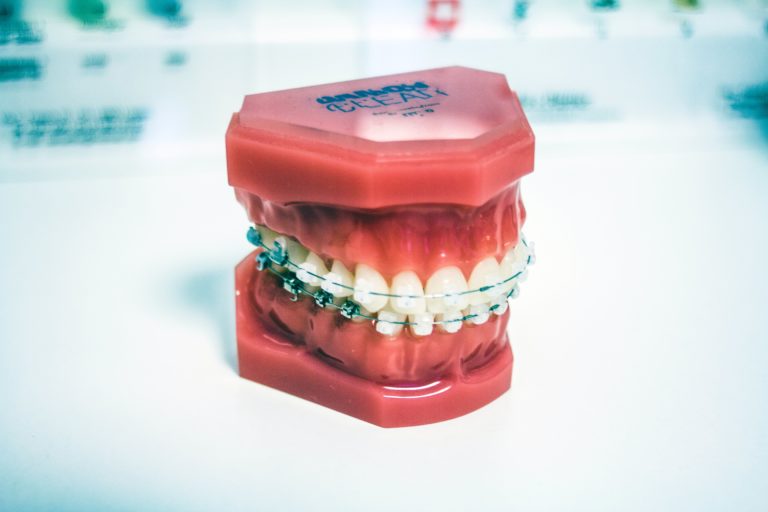
But braces still have their advantages. They’re incredibly effective for complex cases like severe crowding, major bite issues, rotated teeth, or situations where precise, continuous force is needed. Braces don’t rely on patient compliance, either. If you know you might forget to wear aligners consistently, braces may be the more reliable choice.
So, is Invisalign better than braces? It depends on your goals, your lifestyle, and the complexity of your case. For mild to moderate alignment issues, Invisalign is often the preferred choice. For more advanced orthodontic needs, braces may still be the most efficient tool.
Is Invisalign Faster Than Braces?
Speed is one of the biggest questions patients ask, and the answer is surprisingly encouraging: Invisalign can be faster than braces, especially for mild to moderate cases.
Here’s why. Invisalign uses a series of custom-made aligners that apply controlled, targeted pressure to specific teeth at each stage. Because each aligner is designed to move certain teeth in a precise sequence, the process can be highly efficient. Many Invisalign cases finish in 6–18 months, depending on the complexity.
Braces typically fall within a similar timeframe, but many moderate to complex cases can extend treatment to 18–24 months or longer. Braces rely on periodic adjustments, which means movement happens in slightly larger increments. Invisalign, on the other hand, can create smaller, more frequent movements as you switch aligners every one to two weeks.
Another factor that affects speed is compliance. Invisalign only works quickly if you wear your aligners 20–22 hours per day. If you frequently remove them or forget to put them back in, treatment slows down. Braces don’t have that issue since they’re attached and always working.
In short, Invisalign is often faster for straightforward alignment issues, while braces may be faster for complex orthodontic corrections. The best way to know for sure is to have an orthodontic evaluation, where your provider can compare timelines for both options based on your specific needs.
Is Invisalign Cheaper Than Braces?
Cost is a major part of the decision-making process, and many patients are surprised to learn that Invisalign and braces are often priced more similarly than they expect.
In general:
- Invisalign cost range: typically comparable to braces, depending on case complexity
- Braces cost range: varies based on type (metal, ceramic, lingual) and treatment length
For mild to moderate cases, Invisalign can sometimes be less expensive because treatment may require fewer office visits and shorter overall treatment time. For more complex cases, Invisalign may cost slightly more due to the number of aligners needed and the advanced planning required.
Braces, especially traditional metal braces, can be more budget-friendly for patients who need extensive correction. Ceramic or clear braces tend to cost more because of the materials and aesthetics.
Insurance coverage is another factor. Many dental insurance plans now cover Invisalign at the same rate as braces, which helps level the playing field. Flexible spending accounts (FSA) and health savings accounts (HSA) can also be used for either treatment.
Ultimately, the cost difference between Invisalign and braces isn’t as dramatic as many people assume. The best way to get an accurate comparison and find out if invisalign is cheaper than braces for you, is to schedule a consultation and receive a personalized treatment plan for both options.
Invisalign vs. Braces: The Bottom Line
Both Invisalign and braces can deliver excellent results, but the best choice depends on your unique smile and treatment needs. Invisalign shines in comfort and convenience, while braces remain a strong solution for complex cases. Costs and timelines vary across Las Vegas providers, so getting a personalized evaluation is the smartest way to determine which option fits your goals, budget, and lifestyle.