

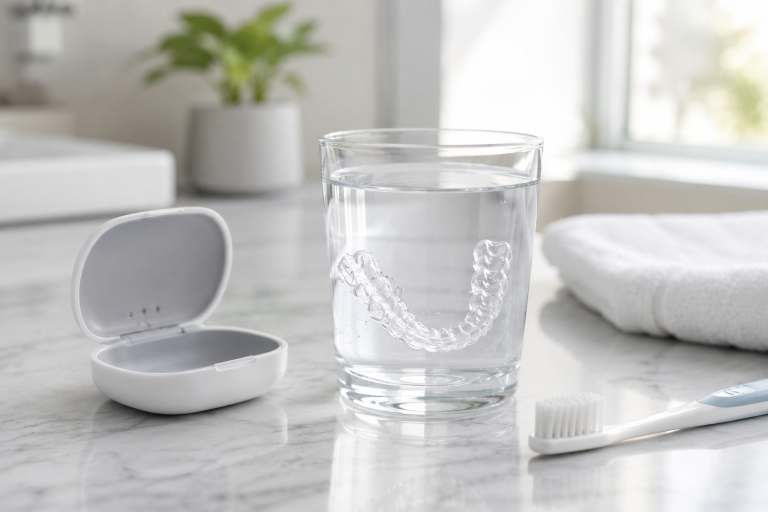
Everything You Need to Know About Clear Plastic Retainers
Clear retainers—also known as Essix retainers—are thin, transparent trays that fit over your teeth to keep them aligned after braces or Invisalign. They’re custom‑made from smooth, medical‑grade plastic and are one of the most popular retainer options because they’re comfortable, nearly invisible, and easy to care for.
Below, we answer the most common questions patients ask about clear retainers, including what they’re made of, how to clean them, how to eat with them, and how they compare to Invisalign.
What Are Clear Retainers Made Of?
Clear retainers are made of high-quality transparent plastic. It’s typically either polypropylene or polyvinyl chloride (PVC), though some retainers may also use PETG plastic for added durability and flexibility.
These are officially called Essix retainers, but your orthodontist will usually recognize either term. Clear retainers are custom-made to fit snugly over your teeth and are designed to help keep your smile aligned after orthodontic treatment.
Because they’re nearly invisible, lightweight, and removable, clear retainers are one of the most popular retainer options for teens and adults alike.
How Do You Eat With a Clear Retainer?
You should always remove your clear retainer before eating or drinking anything besides water. Biting down while wearing it can crack or warp the plastic, and trapped food or sugary drinks can lead to odor, staining, bacteria buildup, and tooth decay.
Before putting your retainer back in, it’s a good idea to brush your teeth or at least rinse your mouth with water. This helps prevent food particles and plaque from getting trapped between your teeth and the retainer.
When your retainer isn’t in your mouth, store it in its protective case to avoid damage or accidentally throwing it away.
How Do You Clean a Clear Retainer?
You should clean your clear retainer every day to prevent bacteria buildup, odors, staining, and plaque. The safest way to clean a clear plastic retainer is with warm water, gentle brushing, and occasional soaking.
Here are the best ways to clean a clear retainer:
- Rinse your retainer with warm (not hot) water every time you remove it
- Use a very soft toothbrush to gently clean the plastic without scratching it
- Never use toothpaste on a clear retainer because it can scratch the surface and make it look cloudy
- Use a cotton swab or Q-tip to clean hard-to-reach corners and edges
- Soak your retainer in a denture cleaner or retainer-cleaning solution as directed
- Soak it in a mixture of water and white vinegar occasionally to help reduce odor and bacteria
- Always store your retainer in a clean protective case when not wearing it
Avoid using boiling water, harsh chemicals, or mouthwash with alcohol, since these can warp or damage the plastic.
One of the easiest ways to keep your retainer clean is to soak it in warm water while you eat. This helps loosen debris and prevents dried saliva and plaque from building up on the surface.
Do Clear Plastic Retainers Straighten Teeth?
Clear plastic retainers can sometimes move teeth slightly, but their main purpose is to keep teeth in place after braces or clear aligner treatment.
Most orthodontists use clear retainers after orthodontic treatment to prevent teeth from shifting as they settle into their new positions. In this case, the retainer is designed to maintain your results rather than actively straighten teeth.
However, some orthodontists may use clear retainers to make minor tooth adjustments. Small movements may be possible if the shifting is mild, and using a retainer can sometimes be faster or less expensive than getting braces again.
If you stop wearing your retainer for a period of time, you may notice it feels very tight when you put it back in. That can be a sign your teeth have started to shift. In some cases, consistently wearing the retainer again may help move your teeth back to their previous position.
If your retainer feels painful, no longer fits correctly, or your teeth have noticeably moved, contact your Las Vegas orthodontist before trying to force it into place. They can recommend whether your current retainer is still safe to use or if you need a replacement or additional treatment.
Are Essix Retainers the Same Thing As Invisalign?
No. Essix retainers and Invisalign may look very similar, but they serve different purposes.
Invisalign aligners are designed to gradually move your teeth into new positions during orthodontic treatment. Each set of aligners is slightly different, and you typically switch to a new tray every 1–2 weeks as your teeth shift over time.
Essix retainers, on the other hand, are usually worn after braces or Invisalign treatment to help keep your teeth in their corrected positions. Instead of moving teeth, they are mainly designed to prevent teeth from shifting back.
Another major difference is how long you use them. Invisalign trays are temporary and replaced frequently throughout treatment, while a clear retainer is meant to last as long as possible with proper care and regular replacement when needed.
Because both Invisalign and Clear Retainers are made from clear plastic and fit snugly over your teeth, they are cleaned and cared for in very similar ways. Both should be removed before eating and cleaned daily to prevent staining, odor, and bacteria buildup.
How Long Does a Clear Retainer Last on Average?
Most clear retainers can last several years, depending on how often you wear them and how well you care for them.
Because clear retainers are made from thin transparent plastic, they naturally wear down over time. Daily use, teeth grinding, heat exposure, and improper cleaning can all shorten their lifespan.
A clear retainer may need to be replaced sooner if you notice:
- Cracks or small splits in the plastic
- Loose or poor-fitting areas
- Sharp edges
- Cloudiness or heavy discoloration
- A strong odor that doesn’t go away with cleaning
With proper care, many people can keep the same retainer for a few years. However, Las Vegas orthodontists often recommend keeping a backup retainer in case one gets lost or damaged.
To help your retainer last longer:
- Remove it before eating or drinking anything besides water
- Keep it away from hot water, dishwashers, and direct sunlight
- Store it in a protective case when not in use
- Clean it gently every day using warm water and a soft toothbrush
If your retainer suddenly feels tight or no longer fits properly, your teeth may have shifted and it may be time to see your orthodontist for a replacement.
Keeping Your Smile in Place
Clear retainers are a simple but important part of protecting your orthodontic results. Whether you recently finished braces or Invisalign treatment, wearing and caring for your retainer properly can help keep your teeth aligned for years to come.
If your retainer feels uncomfortable, becomes damaged, or no longer fits the way it should, schedule a visit with your orthodontist. Catching small issues early can help prevent bigger tooth shifts and may save you from needing additional orthodontic treatment later on.